Module 1: Verify this Regional ACM Hub
Objectives
-
Confirm the RHACM hub is healthy
-
Verify ArgoCD Applications are synced
-
Check operator subscriptions are installed
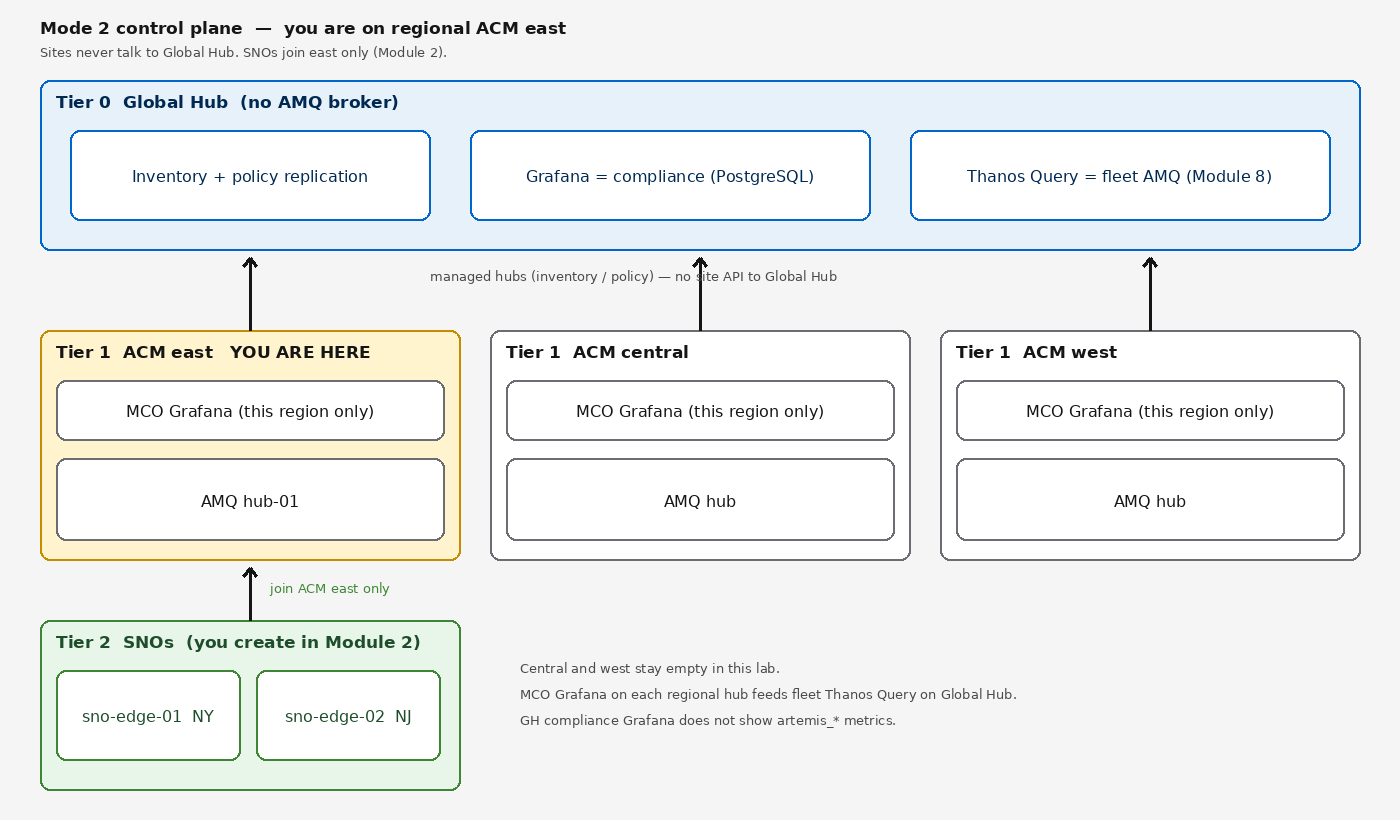
This terminal is regional ACM east, not Global Hub. Confirm local-cluster is this ACM hub. SNOs do not exist until Module 2.
Steps
| If you just completed the Hub-of-Hubs module, make sure you are logged back into your regional hub: |
oc login --insecure-skip-tls-verify=true -u user1 -p '(workshop password)' https://api.hub.example.gcp.redhatworkshops.io:6443Verify with oc whoami --show-server — you should see your regional hub API URL, not the Global Hub.
1. Verify RHACM MultiClusterHub
oc get multiclusterhub -AThe status.phase should be Running.
NAMESPACE                 NAME              STATUS    AGE    CURRENTVERSION   DESIREDVERSION   MESSAGE
open-cluster-management   multiclusterhub   Running   167m   2.17.1           2.17.1           All hub components ready.
2. Check ArgoCD Applications
oc get application.argoproj.io -n openshift-gitopsAll applications should show Synced. field-content may remain Progressing (ApplicationSet with no children). Do not bind ztp-policies to "fix" that.
NAME            SYNC STATUS   HEALTH STATUS
field-content   Synced        Healthy
3. Verify Operator Subscriptions
oc get sub -n artemis
oc get sub -n keycloak
Confirm amq-broker-rhel9 and rhbk-operator (Red Hat Build of Keycloak) subscriptions exist. The output shows the PACKAGE, SOURCE, and CHANNEL columns.
NAME               PACKAGE            SOURCE             CHANNEL
amq-broker-rhel9   amq-broker-rhel9   redhat-operators   7.14.x

NAME              PACKAGE        SOURCE             CHANNEL
rhbk-operator     rhbk-operator  redhat-operators   stable-v26
These subscriptions are created by the field-content ArgoCD Application on this regional hub. If field-content sync has not yet completed, the artemis and keycloak namespaces may not exist yet. Check oc get application.argoproj.io field-content -n openshift-gitops — it should be Synced before these subscriptions appear.
|
4. Check Managed Clusters
oc get managedclustersManaged clusters: only local-cluster until Module 2. local-cluster is this regional ACM hub. After Module 2, sno-edge-01 and sno-edge-02 join this hub. They never appear as direct managed clusters of Global Hub.
NAME            HUB ACCEPTED   MANAGED CLUSTER URLS                                      JOINED   AVAILABLE
local-cluster true https://api.hub.<guid>.gcp.redhatworkshops.io:6443 True True|
Facilitator view — Global Hub sees all four clusters Your regional hub only shows 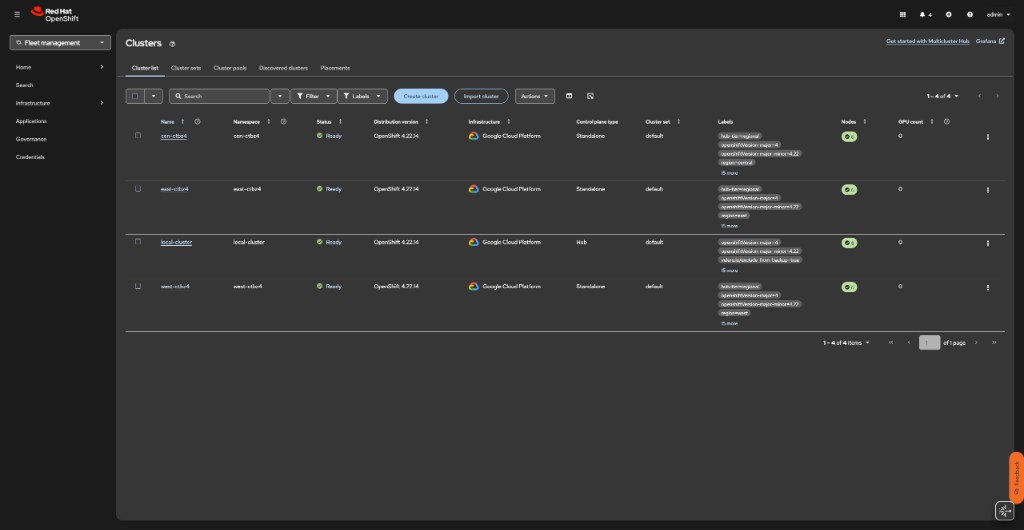
Figure 2. RHACM Fleet management on the Global Hub — all regional hubs imported and Ready
The regional hubs (east, central, west) appear as |
field-content in ArgoCD may stay Progressing because ApplicationSet artemis-edge-workloads has no child apps. That is expected — AMQ on SNOs is delivered by ACM policies in edge-broker-policies, not by ArgoCD apps on the spokes.
|